A savoury, deeply comforting braised pork and egg dish from mY childhood
There are some dishes that don’t need explaining. The smell alone tells you everything. This is one of them.
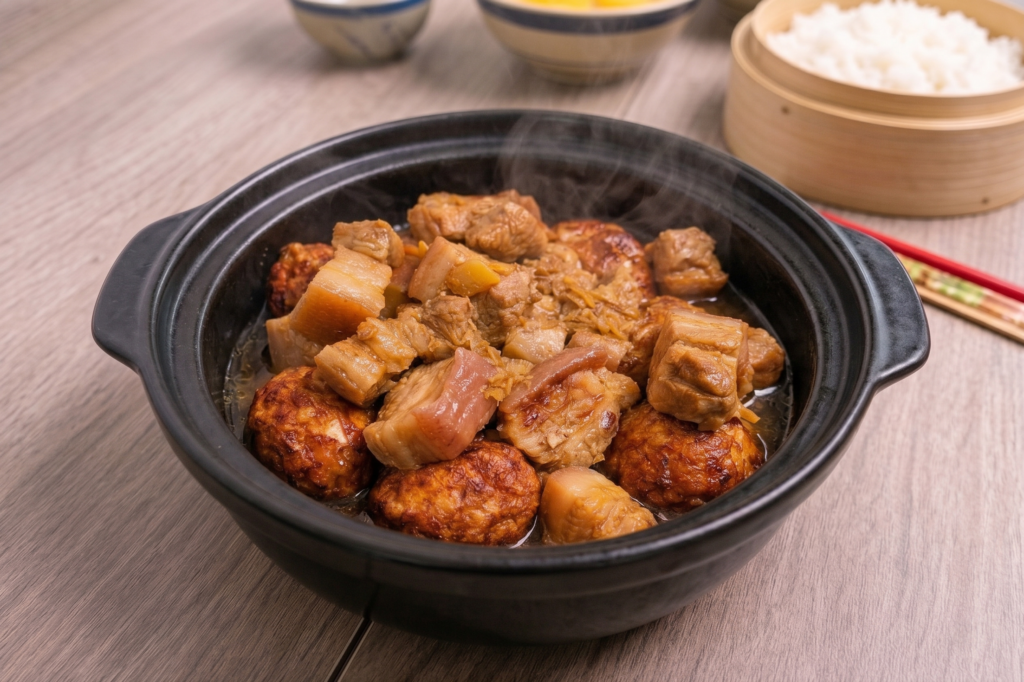
mY mum’s version of Thịt Kho Trứng isn’t the sweet style you’ll often find. It’s more savoury, more grounded. The kind of dish that simmers quietly on the stove, filling the kitchen with warmth, soy, garlic, and that unmistakable richness of pork belly breaking down over time.
And then there are the eggs. I love eggs! A staple in my kitchen.
Not just boiled and dropped in, but fried first until the surface blisters and puffs. It’s a small step that changes everything. The outside turns golden and slightly crisp, then softens and wrinkles as it braises, soaking up every bit of flavour. By the time it’s ready, the eggs are almost better than the pork with it’s creamy yolk in the middle.
This is comfort food at its best.
Why this version works
Most traditional versions, particularly from Southern Vietnam, lean on sugar or coconut water to balance the dish. This one doesn’t, taking its influence from Northern Vietnam where the flavours are more savoury and restrained. Instead, it builds flavour through:
- Fish sauce for depth and saltiness
- Slow braising to tenderise the pork
- Aromatics like garlic, ginger, and star anise
- That extra step of frying the eggs for texture and absorption
The result is rich but not heavy, savoury but still rounded.
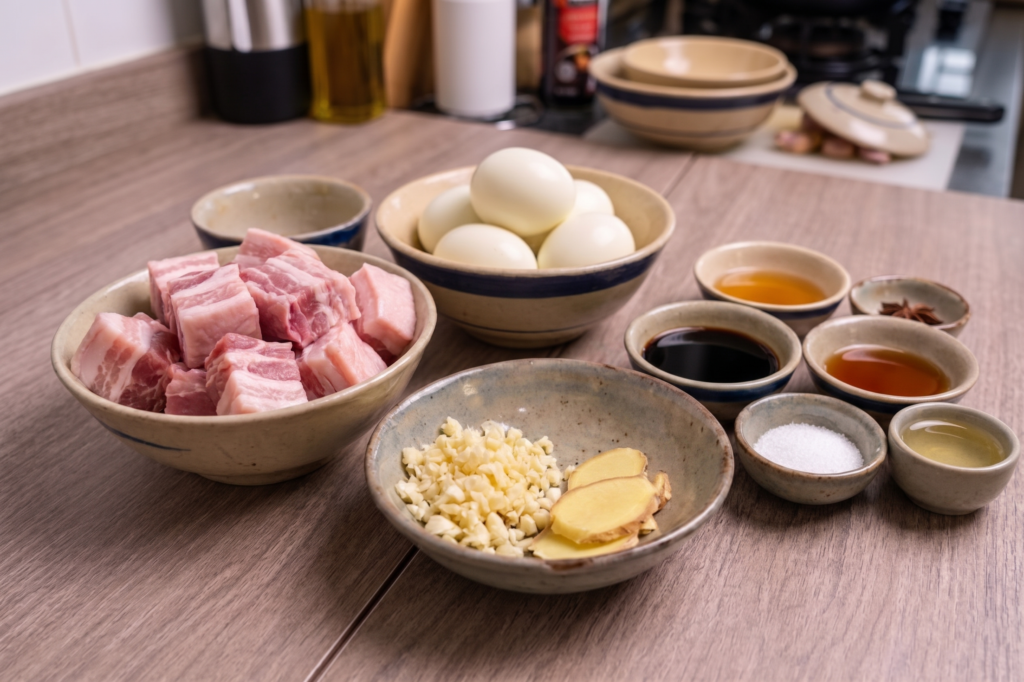
Ingredients
- 600 g pork belly, cut into chunky cubes
- 4 to 6 eggs
- 2 tbsp fish sauce
- 1 tbsp light soy sauce
- 1 tsp dark soy sauce (optional, for colour)
- 1 tbsp Shaoxing wine or dry cooking wine
- 3 to 4 cloves garlic, finely chopped or crushed
- 3 slices ginger
- 1 tsp white pepper
- 400 to 500 ml water or light stock
- Neutral oil for frying
Optional
- Dried shiitake mushrooms for extra umami, soak it for 20 minutes to let it rehydrate before cooking
- A small piece of cinnamon or star anise for subtle warmth (use lightly, not traditional but adds depth)
Method
Start by boiling the eggs for 7 to 8 minutes, then cool, peel, and pat dry. For the boil and fry step, heat a little oil in a pan and fry the eggs until the surface turns golden, blistered, and slightly puffed, then set aside.
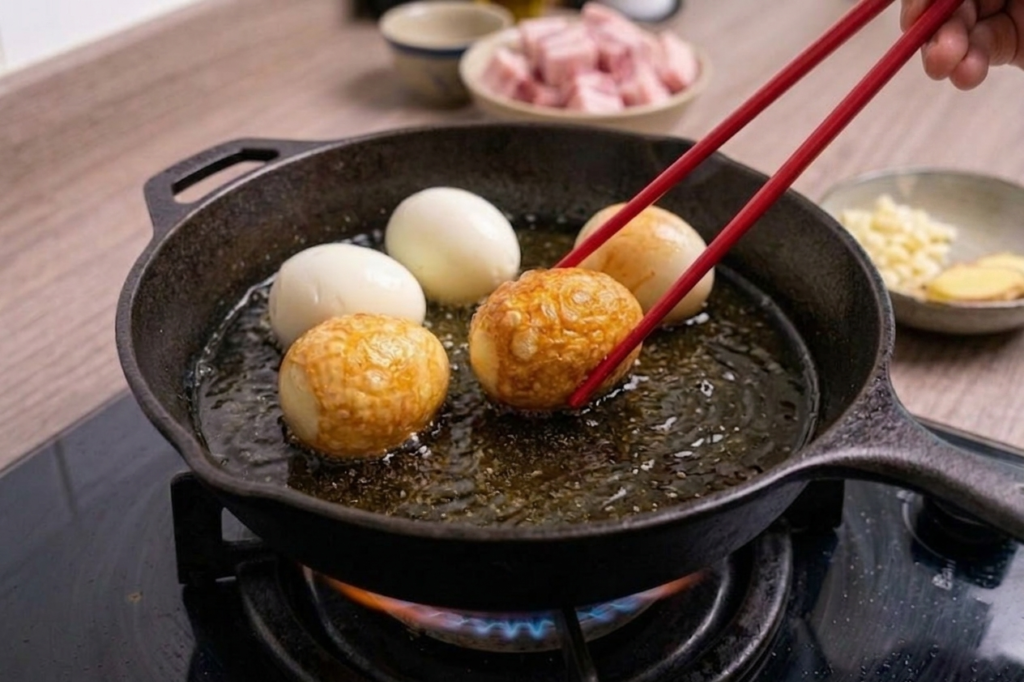
This step gives the eggs that signature texture that holds onto the sauce.
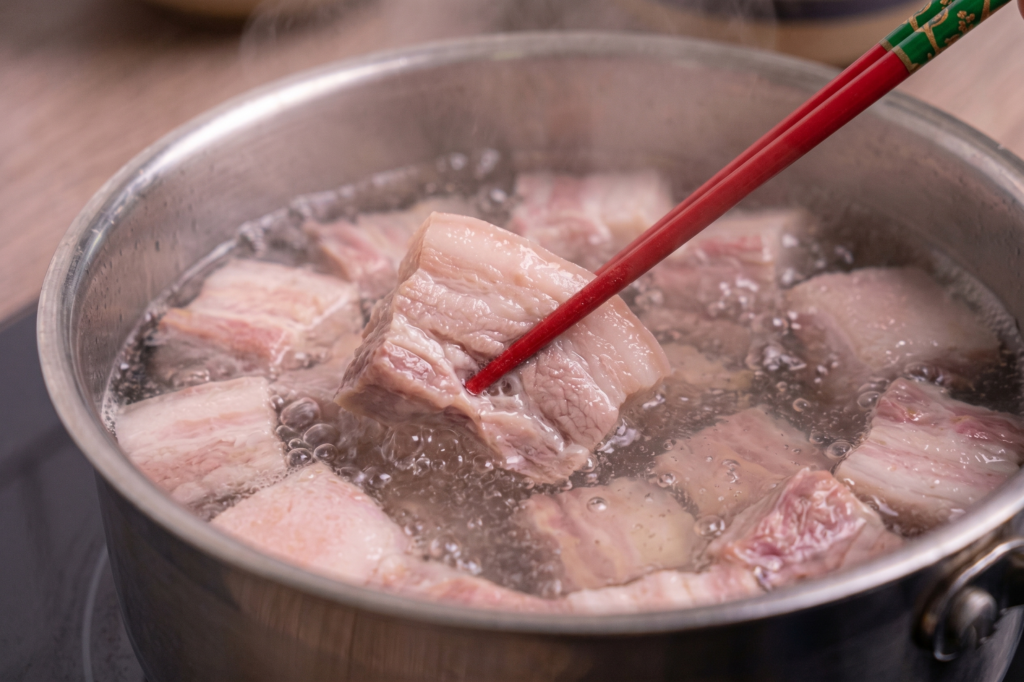
Next, blanch the pork by placing it in cold water, bringing it to the boil for a couple of minutes, then draining and rinsing to keep the broth clean.
Move on to render and sear by cooking the pork in a pot over medium heat, allowing some of the fat to render while lightly browning the edges. No need to add oil. Let the pork do the work.
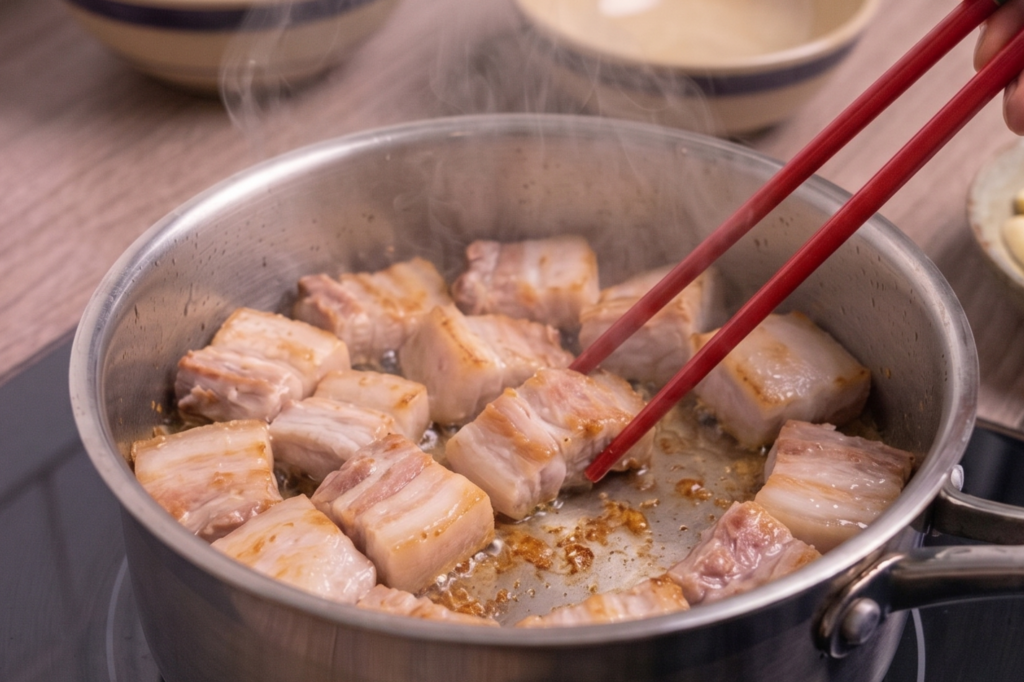
Then build the flavour base by adding the garlic, ginger, and star anise, cooking until fragrant before pouring in the wine to deglaze the pot and lift any flavour from the bottom.
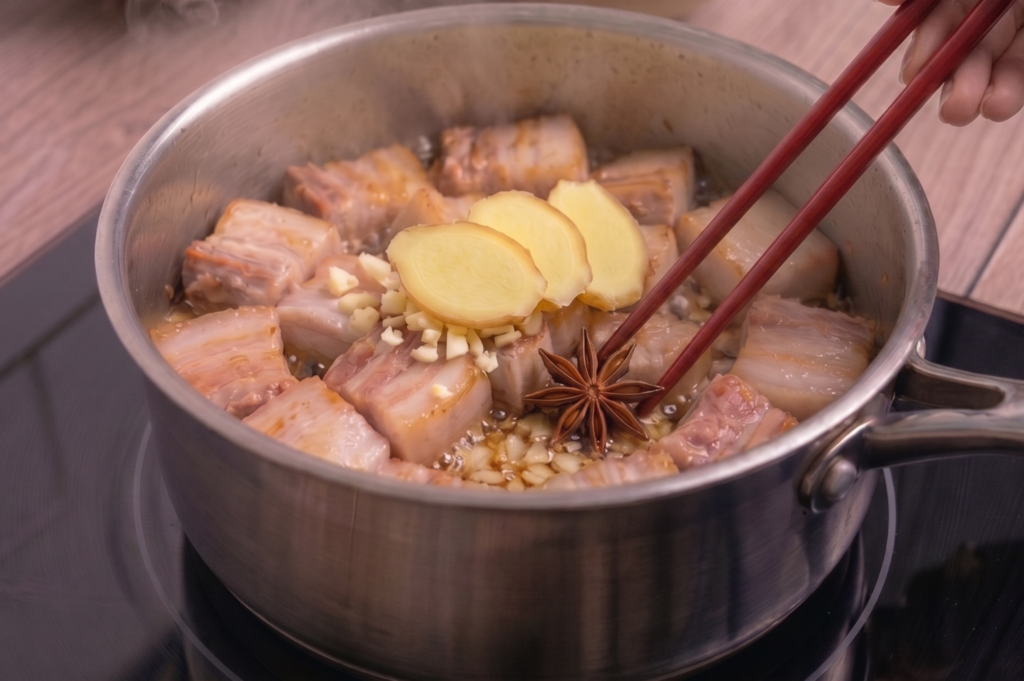
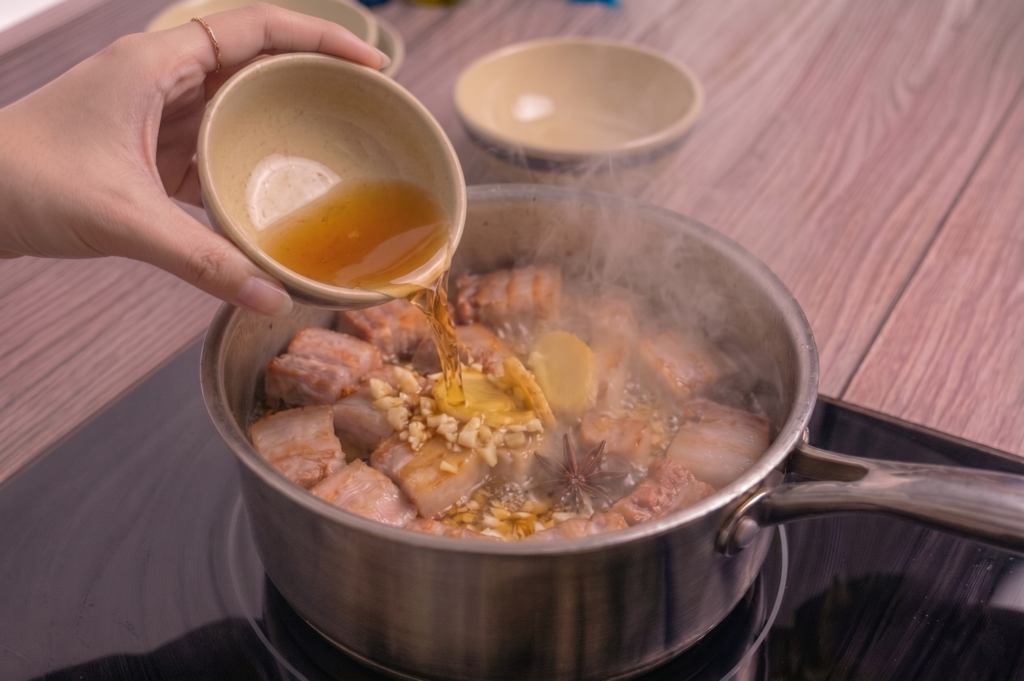
To season, add the fish sauce, soy sauces, and white pepper, stirring so everything is evenly coated. Then braise by pouring in enough water or stock to just cover the pork, bringing it to a gentle simmer, lowering the heat, and covering.
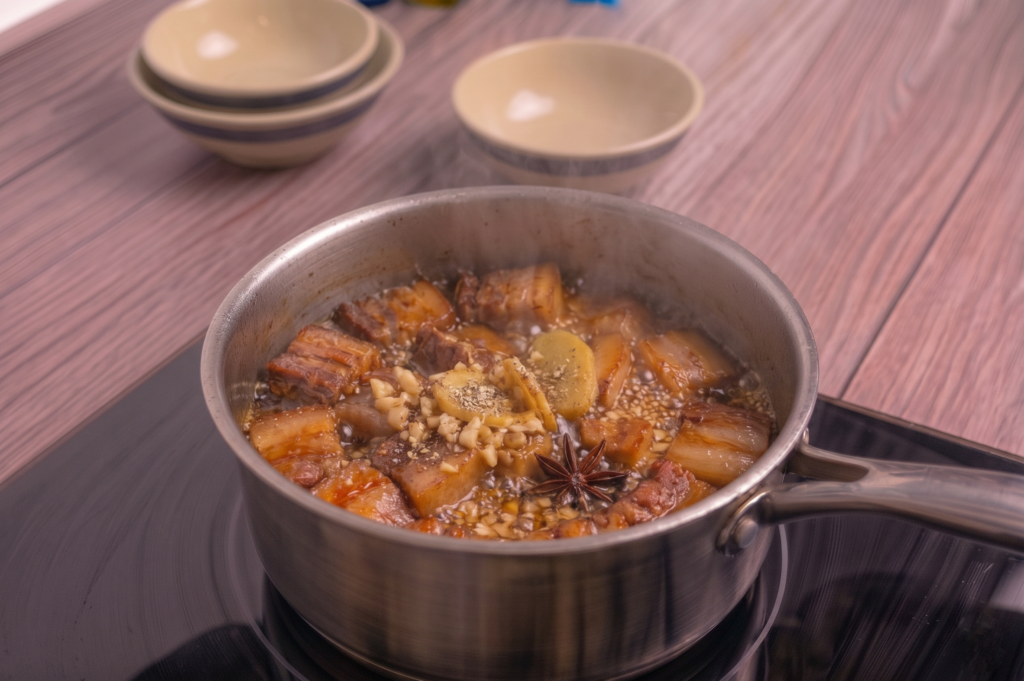
Add the eggs and continue to simmer gently for 45 to 60 minutes, allowing them to darken, soften, and absorb the sauce.
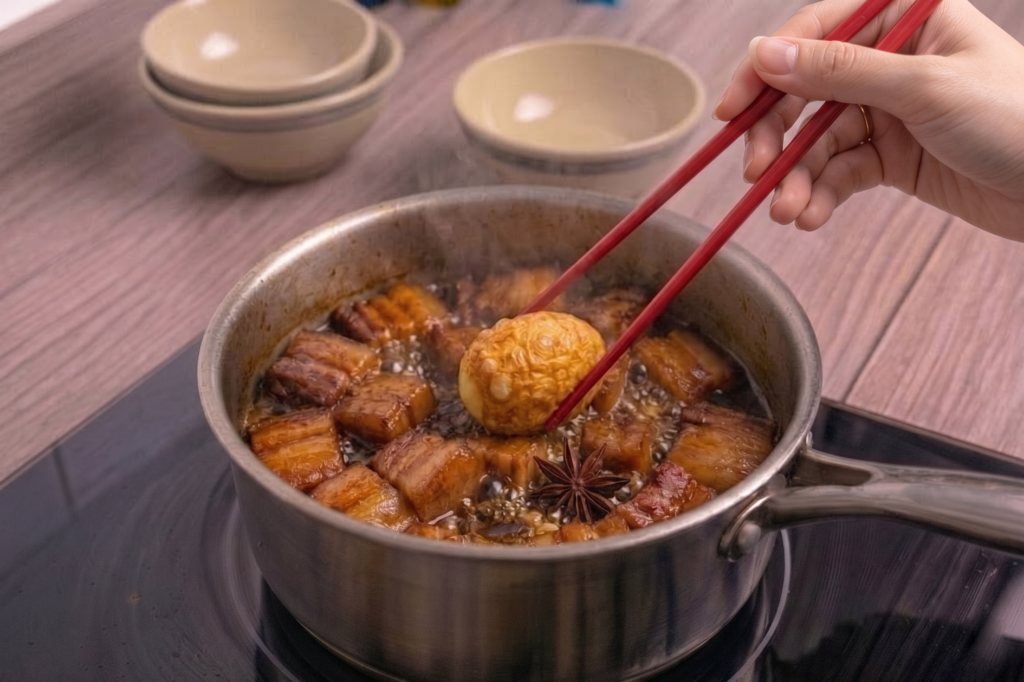
Finally, reduce and finish by removing the lid for the last 10 to 15 minutes so the sauce thickens slightly, then taste and adjust if needed before serving.
How to serve
Serve with steamed jasmine rice and something green on the side like stir fried pak choi or Chinese cabbage.
Spoon the sauce generously over everything. That’s where all the flavour lives.
Tips for the best result
- Go low and slow: Rushing this dish means missing out on depth
- Don’t skip frying the eggs: This is what makes them special
- Balance is key: If it tastes flat, a touch more fish sauce will lift it
- Even better the next day: The flavours deepen overnight
Final thoughts
This is the kind of dish that doesn’t try too hard. It’s simple, familiar, and quietly impressive.
The pork turns soft and rich, the sauce becomes deeply savoury, and the eggs, slightly wrinkled and stained with flavour, steal the show.
It’s the food you come back to. Again and again.