Chilaquiles – A Mexican Classic Worth Bringing Home
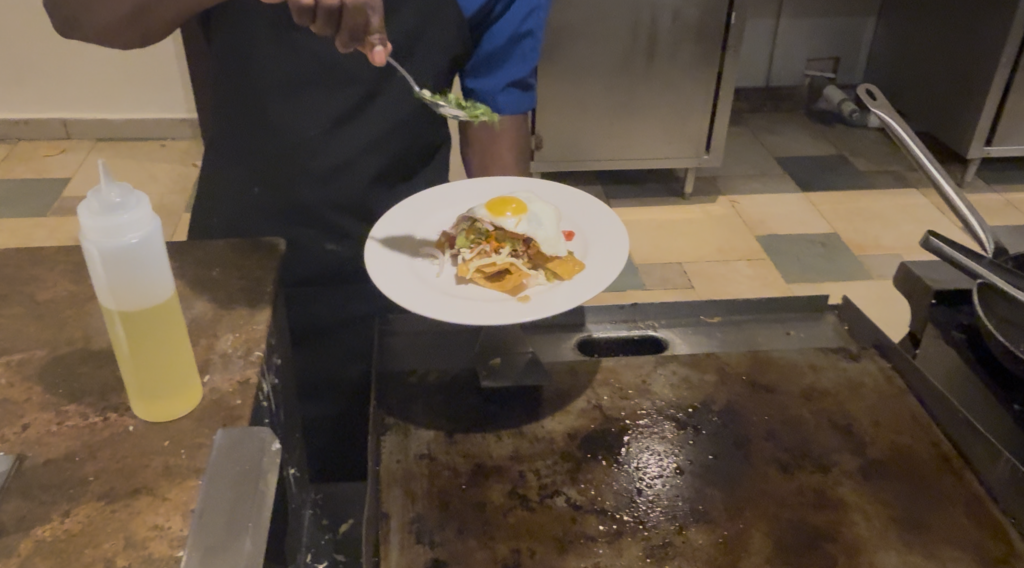
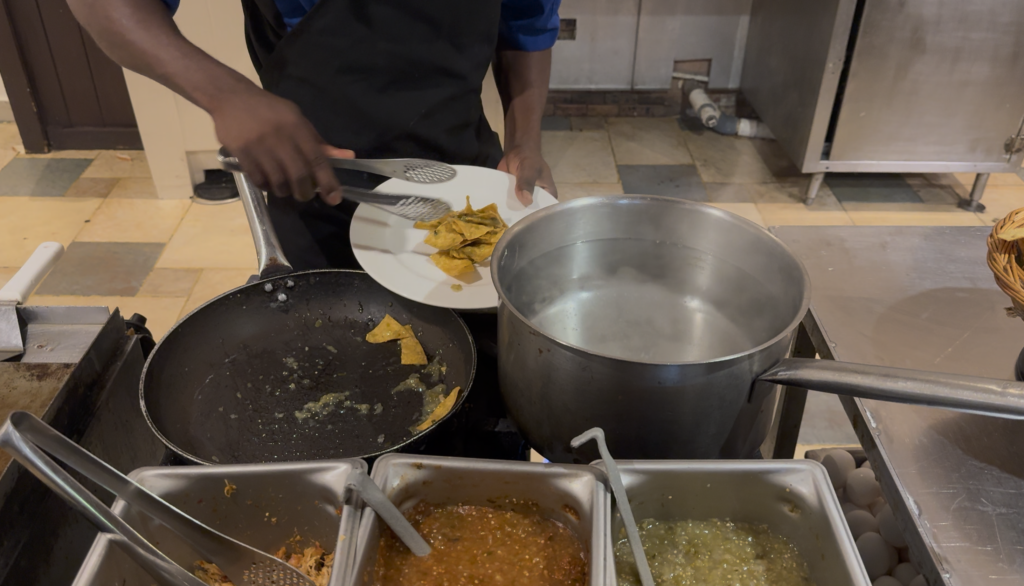
There’s a particular kind of magic in a dish built entirely from leftovers that no one would call “leftover food.” Chilaquiles takes yesterday’s stale tortillas, fries them back to life, and dresses them up with enough sauce, cheese, and fresh toppings that they end up more interesting than anything made from scratch that morning. We discovered them on a trip to the Dominican Republic, at a hotel breakfast, and came home wanting to make them properly ourselves. It’s humble in its bones and generous in its dressing, a plate that looks like it took real effort, built from ingredients that cost almost nothing.
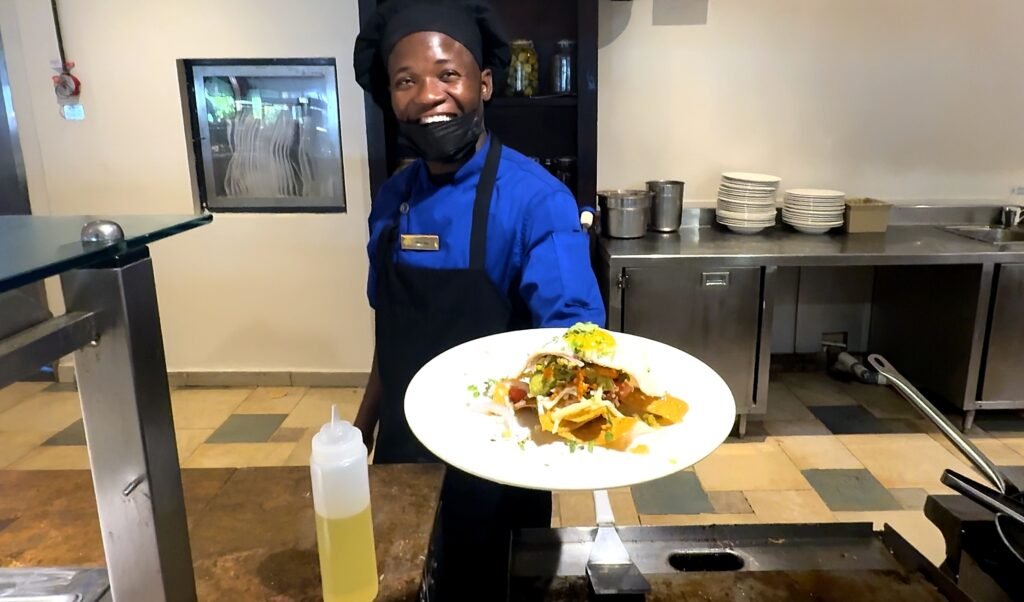
This is the home version: a supermarket shop, about 40 minutes, and a dish that rewards understanding a couple of small techniques rather than following a long list of steps.
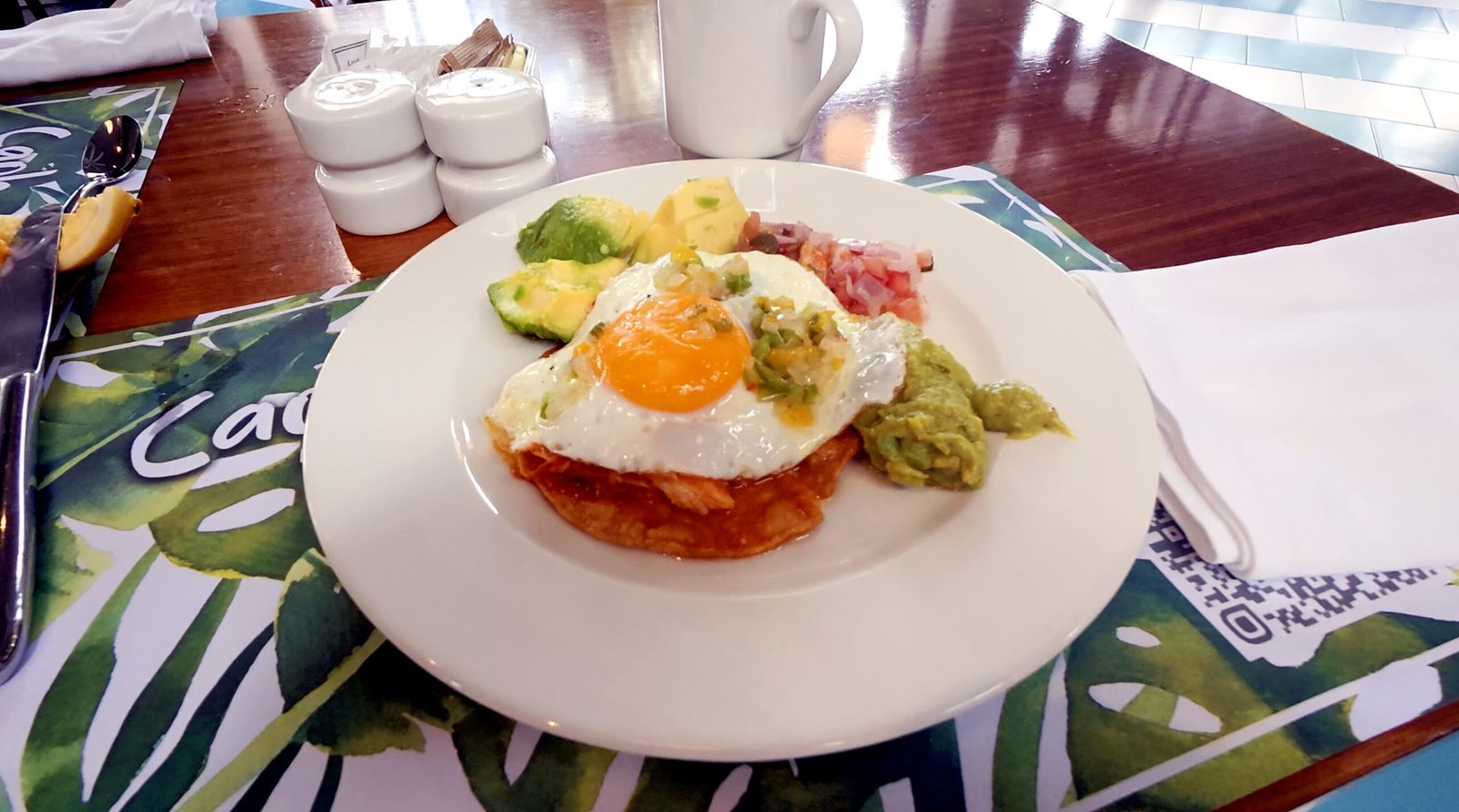
What you’ll get: crispy tortilla pieces, glazed rather than drowned in spicy salsa verde, layered with cooling guacamole, sharp pico de gallo, and a soft fried egg on top.
Difficulty: low. Nothing here requires technique you don’t already have.
Time: about 35 minutes.
Cost: genuinely budget-friendly if you buy them ready-made, which is also completely fine.
Backstory & Context
Chilaquiles are a Mexican breakfast classic. The name is generally traced back to Nahuatl, the language of the Aztecs, and the dish itself grew out of one of the oldest instincts in any kitchen: don’t waste the tortillas. Yesterday’s stack, gone slightly stale, gets cut into wedges, fried until crisp, and revived in a sauce built from dried or fresh chillies. It’s breakfast food, hangover food, and Sunday-morning-with-nowhere-to-be food, all at once, and it varies from house to house depending on whether the sauce is roja (red, chilli- and tomato-based) or verde (green, built on tomatillos).
Chilaquiles
Serves: 2-4
Prep: 20 minutes
Cook: 10 minutes (plus 5 minutes assembly)
Ingredients
For the tortilla chips (skip if using shop-bought)
- 8 corn tortillas (150–200g), cut into sixths
- 250ml (1 cup) neutral oil, for frying — vegetable or sunflower
Essential: corn tortillas specifically, not flour. Corn is what gives chilaquiles their structure and slightly grainy bite. Flour tortillas turn soft and gummy in sauce rather than holding their crisp edge.
For the sauce
- 3 dried guajillo chillies, stems and seeds removed (or 2 tbsp chipotle paste/chillies in adobo, for a smokier sauce)
- 2 medium tomatoes (about 300g), roughly chopped, or 1 x 400g tin plum tomatoes
- 2 garlic cloves
- ¼ onion
- 250ml (1 cup) chicken or vegetable stock
- Salt, to taste
Alternatively, you can simply purchase any hot sauce of your choice if you’re short on time or the ingredients are difficult to source.
Toppings
- Guacamole: 2 ripe avocados, mashed with lime juice, salt, and a little chopped coriander
- Pico de gallo: 2 tomatoes, ½ red onion, a handful of coriander, lime juice, salt
- 60g crumbled queso fresco, or a mild grated cheese such as mozzarella
- Chopped jalapeños
- ¼ red onion, very thinly sliced
- Small handful coriander (cilantro), roughly chopped
- 2 eggs, fried
Optional
- a handful of shredded cooked chicken or slow cooked beef turning chilaquiles from a side into a full plate
- store bought canned refried beans heated up
Substitutions & Alternatives
Tortilla Chips: If you don’t have time to make your own, you can buy ready-made tortilla chips instead. It saves about ten minutes and skips the oil clean-up. The trade-off is texture: fresh-fried chips hold up to the sauce longer before going soft, so ready-made ones will soften a little faster once tossed through.
Salsa: No dried guajillo chillies at hand? A good-quality shop-bought smoky salsa or a spoon of chipotle paste stirred into blitzed tinned tomatoes gets you close in flavour, though you lose some of the fruitiness dried chillies bring.
Cheese: Queso fresco is genuinely hard to find outside specialist shops. A mild, low-moisture mozzarella or even a young Wensleydale-style crumbly cheese does a fair job standing in.
Method
Fry the chips. Heat the oil in a wide pan or wok until shimmering (test with a corner of tortilla — it should sizzle immediately). Fry the tortilla wedges in batches until golden and crisp, about 2–3 minutes per batch. Drain on kitchen paper and salt immediately. Why: salting straight off the oil, while the surface is still glistening, is what makes it stick. Wait too long and it slides off.
Alternatively, you can use store bought nachos or tostadas.
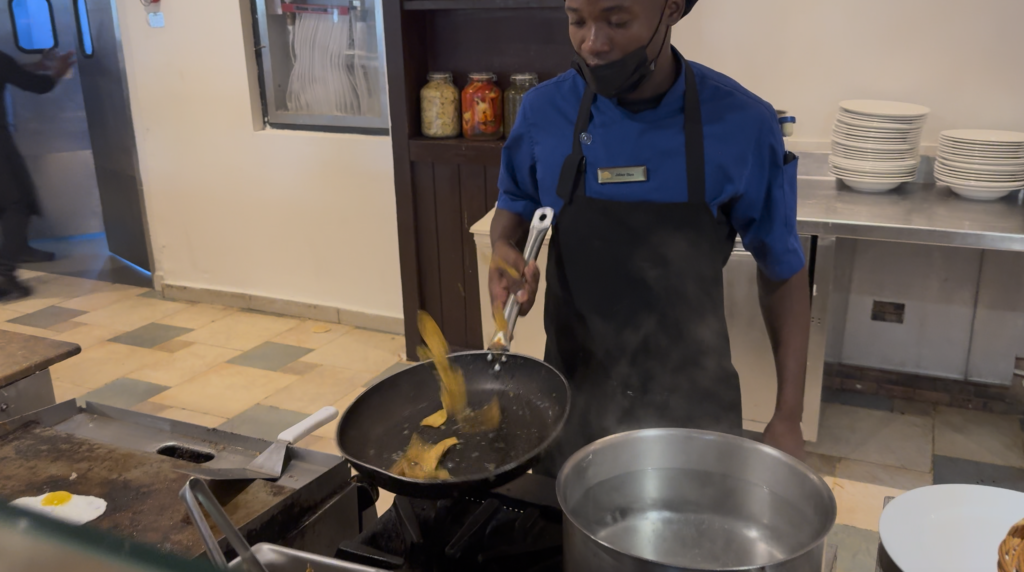
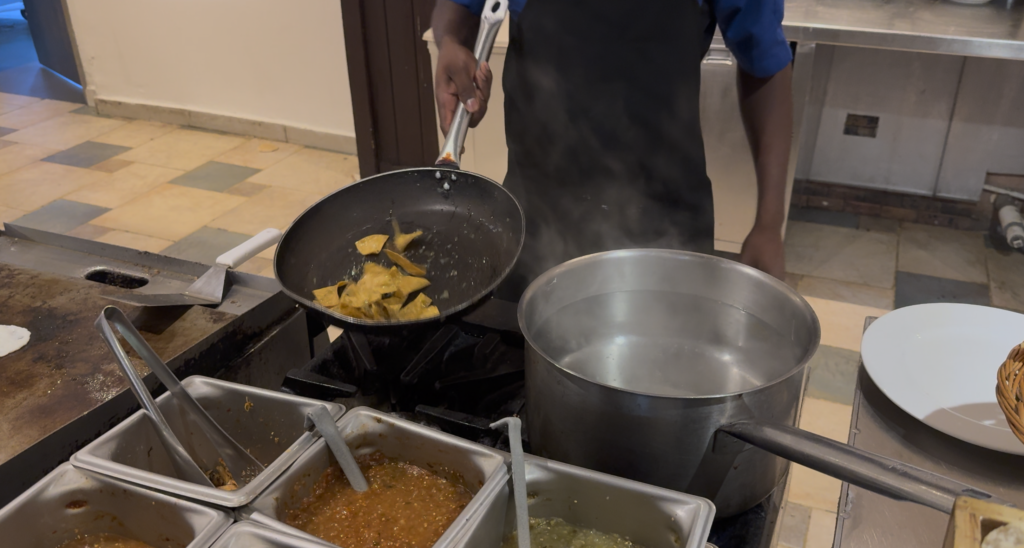
Build the sauce. If using dried chillies, soak them in just-boiled water for 10 minutes until pliable. Blend the chillies (or chipotle paste), tomatoes, garlic, and onion with the stock until smooth. Simmer in a clean pan for 8–10 minutes until slightly thickened and the raw-onion sharpness has cooked out. Why: simmering isn’t optional here, an unsimmered sauce tastes thin and one-note. The reduction concentrates both sweetness and heat.
Toss, don’t drown. Add the fried chips to the sauce and toss gently for 30–60 seconds, just enough to coat and warm them through, then plate immediately. Why: this is the single most important technical point in chilaquiles. Leave the chips in the sauce too long and they turn to mush. The entire point of the dish is the contrast between crisp edges and a softened, sauce-coated centre.
Optional: you can add the cooked chicken here warming it through.
Fry the eggs. In a separate pan, fry the eggs to your preference. A soft, runny yolk is traditional and gives the dish its sauce-within-a-sauce moment when it breaks.
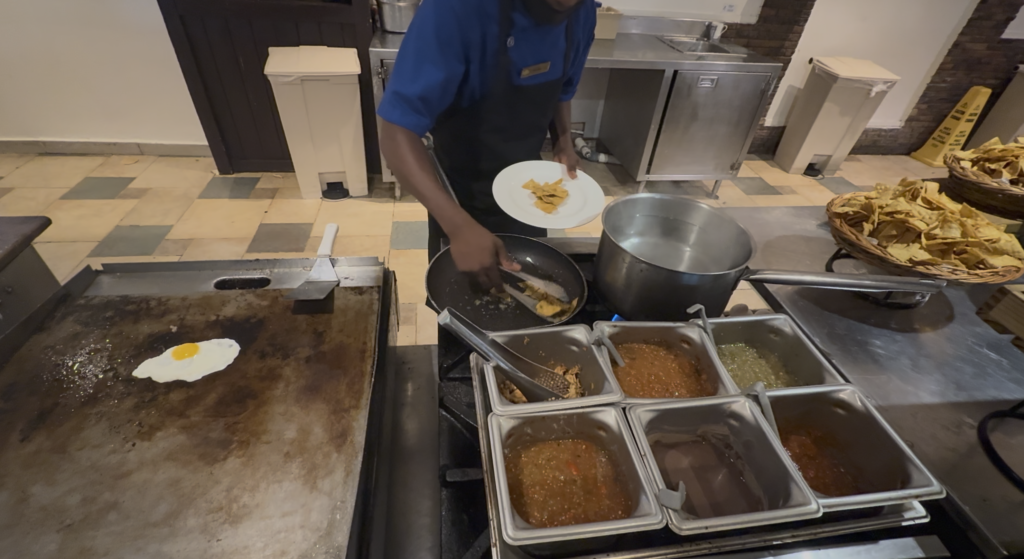
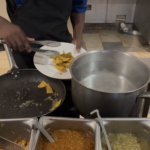
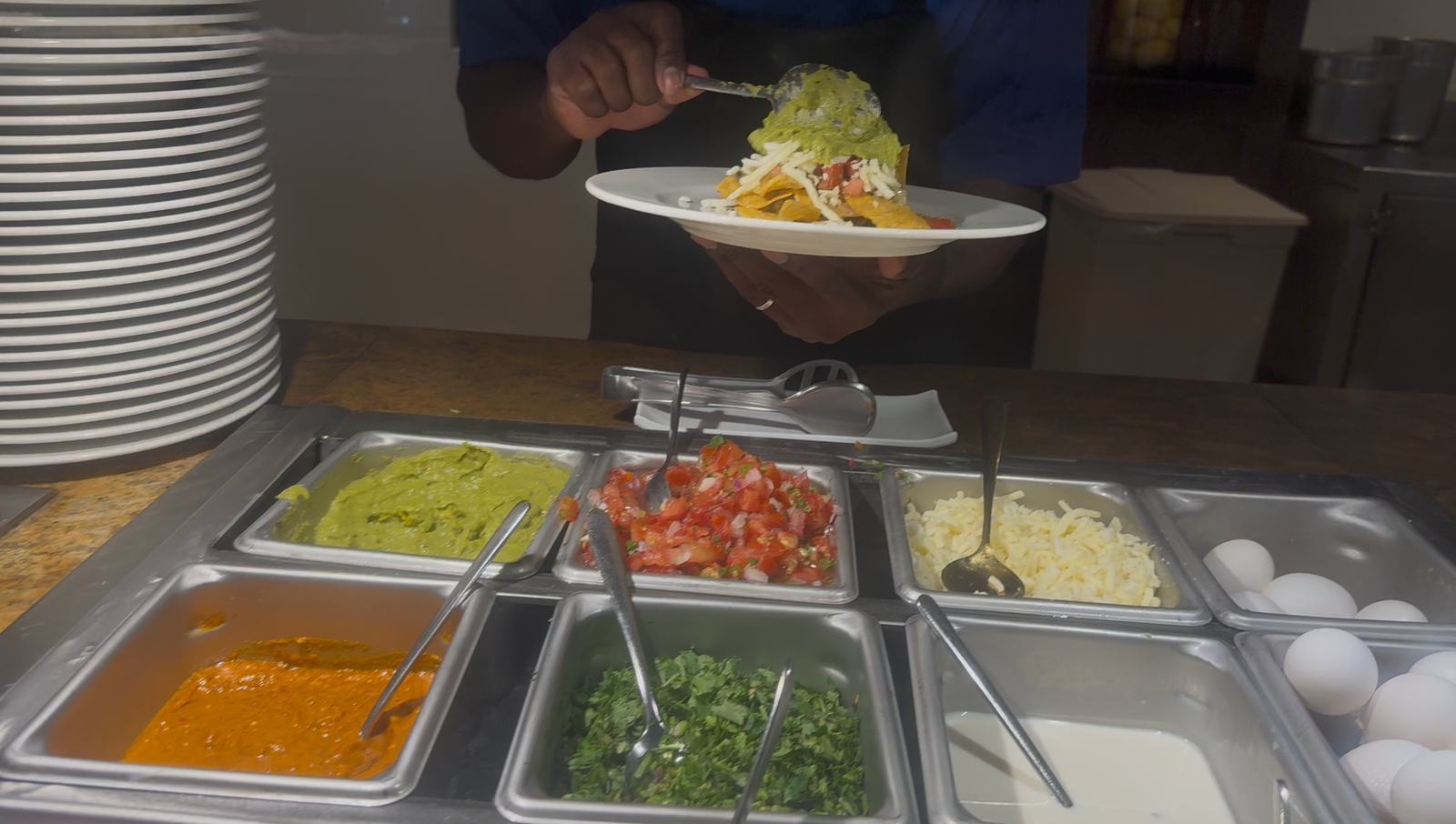
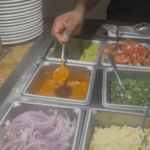
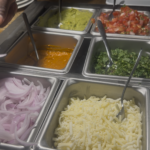
Assemble. Plate the sauced chips, then build upward: a scattering of pico de gallo, cheese, sliced onions, jalapeños, a spoon of guacamole, coriander, and finally the fried egg on top with some extra coriander, jalapeños and hot sauce for garnishing.
Do’s and Don’ts
Do fry your chips fresh, or at least use good-quality shop-bought ones. Stale, thin supermarket tortilla chips collapse the moment they meet sauce. There’s no structural bite left to lose.
Don’t let the chips sit in the sauce. This is the mistake that turns chilaquiles into wet mush and is the single biggest difference between a good plate and a disappointing one. The secret is timing: once the tortilla chips go into the sauce, serve immediately so they stay slightly crisp rather than becoming soggy. Toss, plate, move on.
Do taste your sauce before it touches the chips. Once assembled, you can’t fix underseasoning. The chips will have already softened by the time you notice.
Don’t skip the acid. Lime in the guacamole and pico de gallo isn’t garnish, it’s what cuts through the richness of the fried egg, cheese, and sauce. Without it, the dish tips into heavy rather than balanced.
Tips
- Make-ahead: the sauce keeps in the fridge for up to 3 days and freezes well. Make a double batch on a quiet evening. The chips are best fried fresh, but shop-bought ones make this a genuine 15-minute breakfast if the sauce is already done.
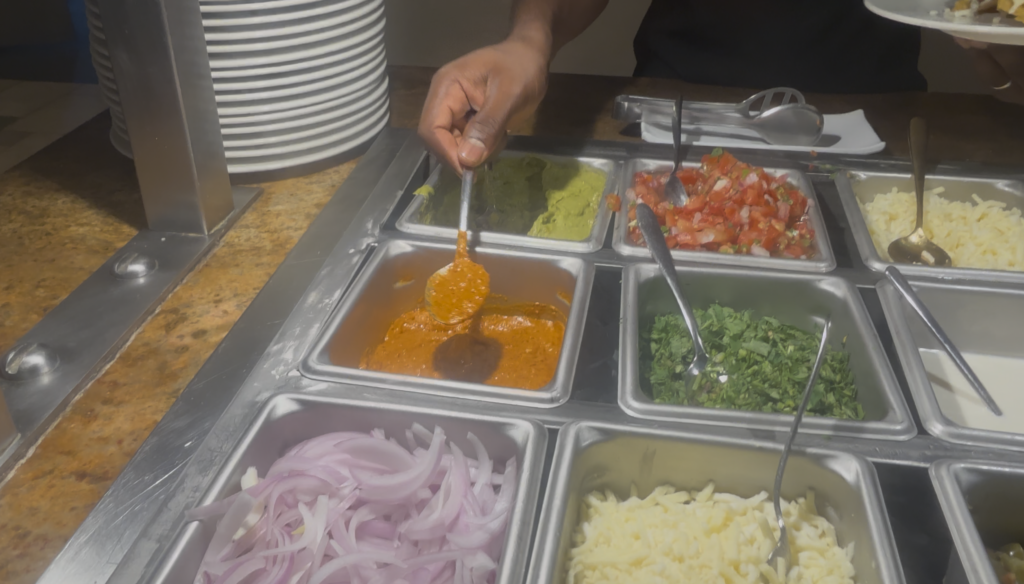
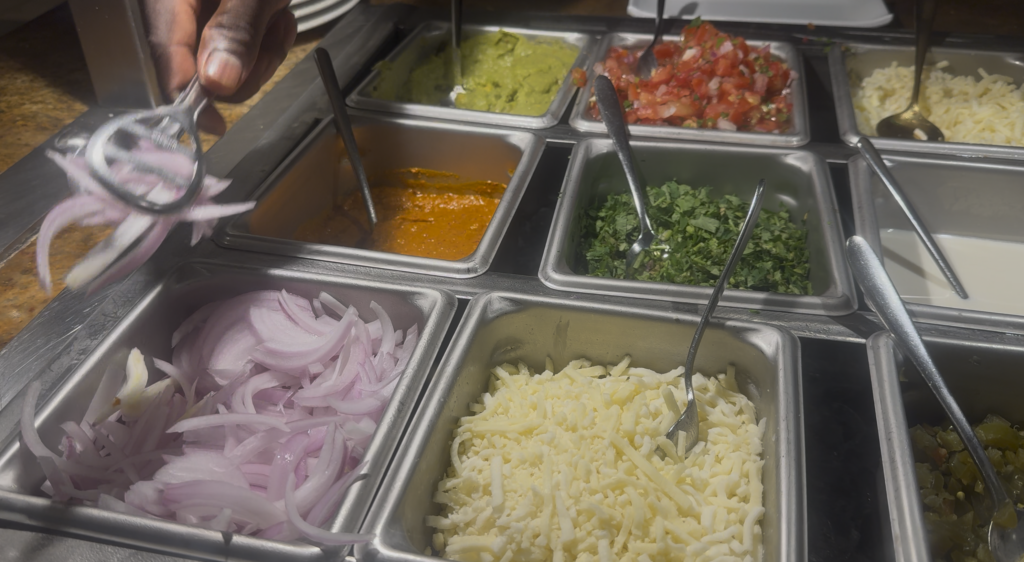
- Scaling up: for a crowd, keep the sauce and toppings on the table buffet-style and let people build their own. It also means everyone controls their own heat level.
- Storage: don’t store assembled chilaquiles; they don’t reheat well once soft. Store components separately.
- Plating: resist the urge to smother. The best-looking plate we saw had visible structure — chip, sauce, a few distinct spoonfuls of topping, egg on top rather than everything blended into one pile.
Chilaquiles are one of those dishes that reward understanding the why behind each step more than following it to the letter. Once you’ve got the sauce-to-chip timing right, you can chase your own version indefinitely: green instead of red, chorizo instead of chicken, extra chilli if that’s your morning. If you make it, we’d love to know which way you took it.